
Net Metering in Pakistan 2026 Tariff Rates & Full Guide
Last updated: July 2026
Net metering is growing fast across Pakistan. If you already have solar panels at home, or you are thinking about installing them, this guide is for you. We will explain, in easy words, how net metering is calculated, what the current tariff rates are, and how you can use this system to lower your electricity bill.
What Is Net Metering in Pakistan?
Net metering is a system that lets you produce your own electricity using solar panels and send any extra power back to the national grid, run by WAPDA. When you need electricity from the grid, for example, at night, the same meter tracks that too.
In simple terms, the system keeps a running balance between the electricity you give to the grid and the electricity you take from it. You can check this balance yourself using the GEPCO Bill Calculator. If your solar panels produce more power than you use, this balance can lower your bill significantly, and in some cases, you may even earn a credit toward future bills.
What This Guide Covers
In this guide, we will walk through:
- Peak and off-peak timings, knowing these helps you manage when you use electricity.
- How net metering is calculated, and which months this calculation happens.
- Tariff rates, the numbers that make the whole calculation work.
- Bill reduction tips, simple habits that can lower your monthly cost.
Understanding Peak and Off-Peak Timings
The time of day you use electricity matters a lot under net metering. Peak timing usually starts in the evening and can shift slightly depending on the season. Electricity is more expensive during this window.
Off-peak timing has lower rates. If you use less electricity during peak hours, and shift more of your usage to daytime hours, when your solar panels are producing the most power — your bill will naturally come out lower.
| Time | Description | Rate |
|---|---|---|
| Peak Timing | Usually evening through night; high demand | Higher rate |
| Off-Peak Timing | Daytime or certain night hours; low demand | Lower rate |
How Is Net Metering Calculated?
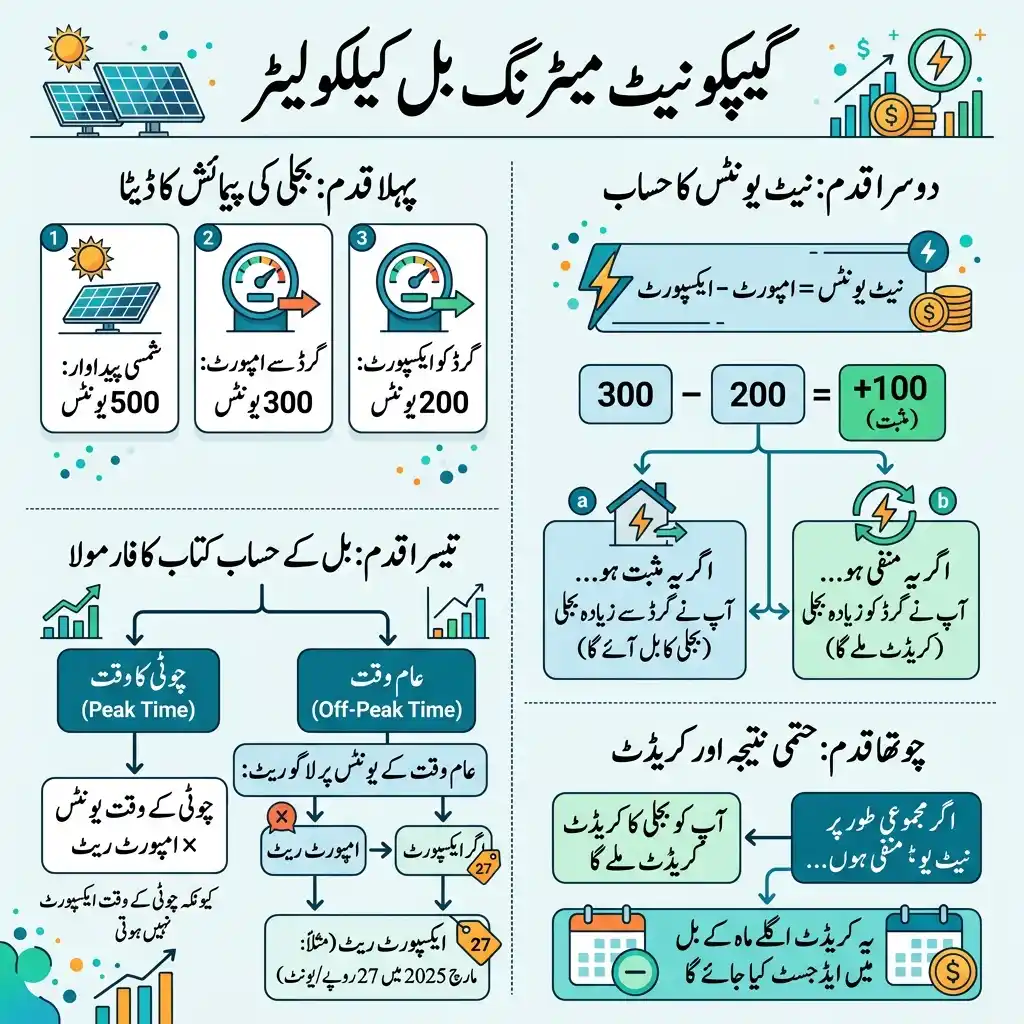
Net metering calculations happen quarterly, meaning once every three months. These calculations are usually done in September, December, March, and June. To understand your own bill, you will need a few basic details:
- Billing month
- Tariff code: this tells you which rate category applies to you
- Import and export units: how much electricity you took from the grid, and how much you sent back
- Current and previous month’s units, also needed to complete the calculation
Example Calculation
Let’s say your solar panels produced 500 units, you used 300 units yourself, and you exported 200 units back to the grid. A net metering bill calculator would work through this like so:
- Import minus Export: If this number is positive, you took more electricity than you gave. If it’s negative, you gave more than you took.
- Formula:
- Peak units × Import rate (since exporting is usually not possible during peak hours)
- Off-peak units × Import rate (if you imported more) or Export rate (if you exported more, this was around Rs. 27 per unit in March 2025)
If your final unit balance is negative, you receive a credit, which gets adjusted into your next bill automatically.
Tariff Rates Explained
Tariff rates for net metering are approved by NEPRA (the National Electric Power Regulatory Authority), the government body responsible for setting electricity prices in Pakistan. These rates are typically reviewed and updated every year in July.
Rates are different for peak and off-peak hours. For example, the export rate in the March 2025 billing cycle was around Rs. 27 per unit, though this figure can drop to as low as Rs. 10 per unit in other quarters, depending on NEPRA’s latest decision.
You can always check the most current, official rates directly on NEPRA’s website.
| Tariff Type | Example Rate | When It Applies |
|---|---|---|
| Peak Import | Rs. 35–40/unit | Electricity taken during peak hours |
| Off-Peak Import | Rs. 20–25/unit | Electricity taken during off-peak hours |
| Export Rate | Rs. 27/unit | Electricity sent to the grid (March 2025 rate) |
How to Read Your Net Metering Bill
Your net metering bill shows quite a bit of information. Here’s what to look for:
- Current month units: This month’s import and export numbers
- Previous month units: Data from the last two months
- Energy charges: Shown as either a credit or a debit
- Net units: Import minus export. If this number is negative, you receive a credit.
For example, if your current month shows 4,253 total units, 39 peak units, and a net of -38 units, that negative number becomes a credit, which is automatically adjusted into your next bill.
Tips to Reduce Your Electricity Bill
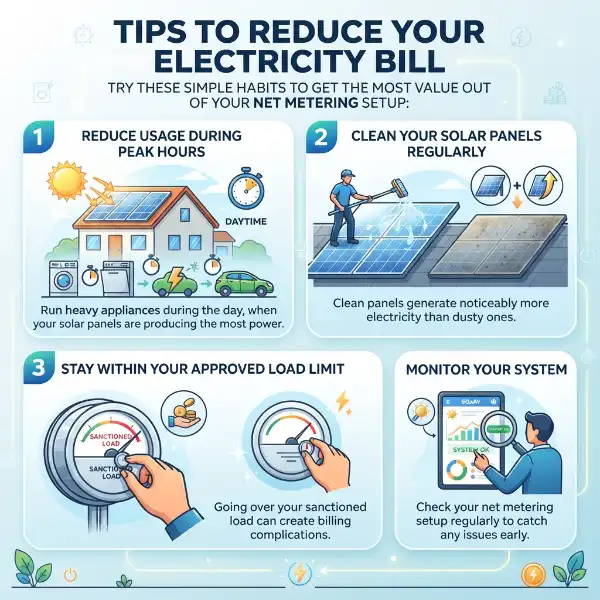
Try these simple habits to get the most value out of your net metering setup:
- Reduce usage during peak hours. Run heavy appliances during the day, when your solar panels are producing the most power.
- Clean your solar panels regularly. Clean panels generate noticeably more electricity than dusty ones.
- Stay within your approved load limit. Going over your sanctioned load can create billing complications.
- Monitor your system. Check your net metering setup regularly to catch any issues early.
If your solar system generates more electricity than you use, your bill may not just drop to zero, it could go negative, meaning you actually get paid for the extra power you sent to the grid.
Conclusion
Net metering is one of the smartest ways to lower your electricity bill in Pakistan. In this guide, we covered how the calculation works, what today’s tariff rates look like, and simple tips to get more value from your solar investment.
If you’re planning a new solar setup, it also helps to understand your GEPCO new connection process first, since your net metering account is linked to your existing connection. And once your system is running, use the GEPCO Bill Calculator to double-check your monthly estimate, and read our guide on Apna Meter Apni Reading to make sure your meter readings stay accurate and free of overbilling errors.
If you have any questions or need a calculation sheet, feel free to reach out, we’re happy to help.