
GEPCO 200 Units Rule: What Happens If Your Bill Crosses the Limit?
Have you ever looked at your electricity bill and wondered why it suddenly jumped so much higher than last month? You might think using just one extra unit (above 200 units) of electricity couldn’t make a big difference. But in Pakistan’s electricity system, that one extra unit can push your bill up by thousands of rupees.
In this guide, we’ll break down exactly what happens when your usage crosses the 200 unit mark, why this rule exists, and what it means for your monthly budget, explained in simple, easy to understand language.
What Is a “Protected Consumer” in Pakistan?
In Pakistan, electricity users are divided into categories based on how many units they use. If a household uses 199 units or less for six months in a row, they are called a Protected Consumer.
Protected Consumers get electricity at lower rates compared to everyone else. This is meant to help low-income and average households keep their bills affordable.
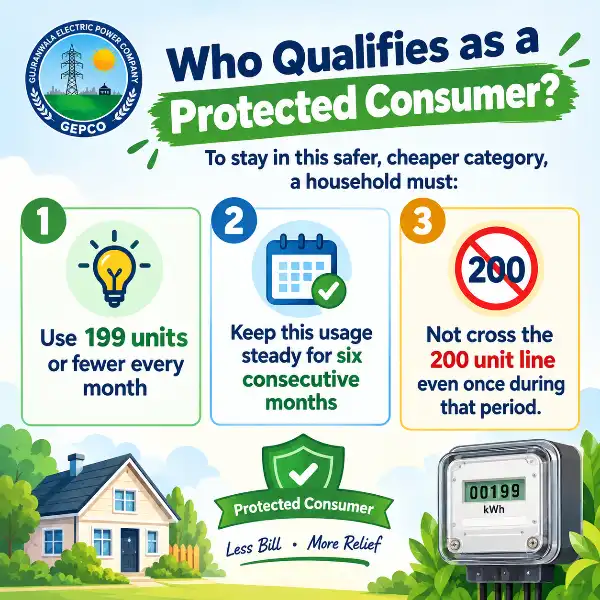
Who Qualifies as a Protected Consumer?
To stay in this safer, cheaper category, a household must:
- Use 199 units or fewer every month
- Keep this usage steady for six consecutive months
- Not cross the 200 unit line even once during that period
If all these conditions are met, the consumer enjoys a lower per-unit rate on their bill.
What Happens When You Cross 200 Units?
Here’s the part that surprises most people. The moment your usage touches 200 units, you are moved into the next pricing category, and this isn’t a small change.
Once you cross this line:
- You lose your “protected” status
- Your electricity is billed at a much higher rate
- Even units you used before reaching 200 can be charged at the new, higher rate depending on the billing slab rules
This means one extra unit of electricity, something as small as running an iron for a few more minutes, could end up costing you thousands of rupees more.
Why Was This 200 Unit Rule Created?
This slab system wasn’t created randomly. It goes back to a time when Pakistan was facing a severe electricity shortage and heavy load shedding.
The government wanted to encourage people to use less electricity, so it designed a pricing system where:
- Low usage = lower price
- Higher usage = higher price
The goal was simple: push people to save electricity when supply was limited.
Why This System Doesn’t Fully Make Sense Anymore
Here’s the twist, the situation in Pakistan today is very different from when this rule was made.
Currently:
- Pakistan’s electricity production capacity is more than what is actually needed
- Many power plants are being paid even when they are not producing electricity
- Ordinary consumers still pay these expensive capacity charges as part of their bills
So even though the electricity shortage that caused this rule is mostly gone, everyday consumers are still paying the price for a system built for a different era.
What Could Change in the Future?
Under Pakistan’s agreement with the IMF (International Monetary Fund), there are plans to change how electricity subsidies work in the coming years.
Here’s what this could mean:
- General subsidies (that everyone benefits from) may slowly be removed
- Direct financial support may instead be given only to people who genuinely need it
- If capacity payments and the power production system are not reformed, the financial burden on middle-class and average households could increase further
What Experts Suggest
Many energy experts believe the government should:
- Convert unused (“idle”) power plants into battery energy storage systems
- Make better use of solar energy, which Pakistan has in abundance
- Reduce dependence on expensive capacity payments over time
If these steps are taken, electricity costs could become more balanced and fair for regular households.
How to Avoid Accidentally Crossing 200 Units
Since crossing this limit can significantly raise your bill, here are a few simple habits that can help:
- Track your daily electricity usage instead of waiting for the bill
- Avoid running heavy appliances (AC, iron, water heater) at the same time
- Turn off appliances at the plug instead of leaving them on standby
- Check your monthly usage a few days before your billing cycle ends
- Use energy-efficient (inverter) appliances where possible
Frequently Asked Questions
What happens if I use exactly 200 units?
Once your usage touches 200 units, you generally move out of the protected consumer category and into a higher pricing slab.
Can I go back to being a protected consumer later?
Yes. If your usage returns to 199 units or below for six consecutive months, you can regain protected consumer status.
Does crossing 200 units affect my entire bill or just the extra unit?
Depending on the applicable slab rules, crossing the limit can affect the rate applied to a larger portion of your usage, not just the single extra unit which is why the bill increase can feel so large.
Why do capacity payments matter to consumers who don’t use extra electricity?
Why do capacity payments matter to consumers who don’t use extra electricity? Capacity payments are a fixed cost added to Pakistan’s overall electricity system, and this cost is shared across the consumer base regardless of individual usage.
Final Thoughts
Understanding how Pakistan’s electricity slab system works can help you plan your monthly usage more wisely and avoid unexpected bill shocks. While the 200 unit rule was designed for a different time, it still plays a major role in determining what you pay today.
Keep an eye on your usage, understand your billing category, and stay informed about any policy changes, this is the best way to keep your electricity bill under control.